Veleiros Carvalho, Nauta, Maria Sony e Madalan 2026-09-02
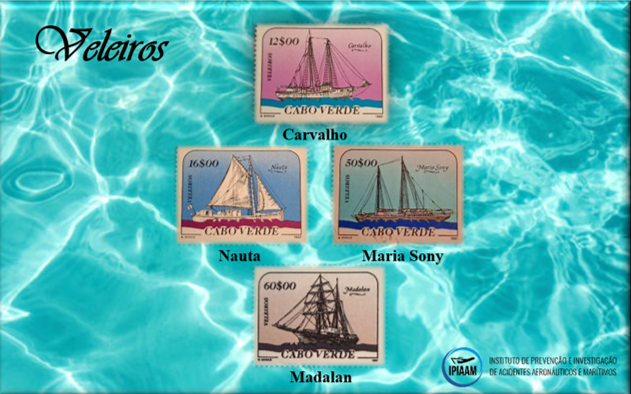
Os veleiros Carvalho, Nauta, Maria Sony e Madalan fazem parte da memória marítima de Cabo Verde. Durante grande parte do século XX, foram essenciais para a ligação entre as ilhas, numa época em que o arquipélago dependia da navegação à vela — mais tarde complementada por motores auxiliares — para o transporte de passageiros e mercadorias.
Carvalho (palhabote)
Construído em 1937 no estaleiro tradicional do Porto da Furna, na ilha Brava, e lançado ao mar em 1938, este veleiro constitui um dos mais importantes testemunhos da construção naval tradicional cabo-verdiana. Considerado o último grande veleiro de madeira construído na Brava — ilha onde, entre 1900 e 1950, foram lançadas cerca de vinte embarcações destinadas à cabotagem —, desempenhou durante várias décadas um papel fundamental no transporte interilhas de passageiros e carga.
É atualmente um dos poucos exemplares sobreviventes de uma época em que a navegação à vela assegurava a ligação entre as ilhas do arquipélago. A sua importância histórica foi também reconhecida através de uma emissão filatélica e de uma moeda de 10 escudos.
Nauta (cúter)
O cúter desempenhou um papel importante nas ligações marítimas entre as ilhas de Cabo Verde, realizando com frequência a travessia entre São Vicente e Santo Antão. Tornou-se conhecido pelas longas viagens, muitas vezes condicionadas pelas condições do vento, sobretudo no Canal de São Vicente, onde a navegação à vela exigia experiência e perícia por parte das tripulações.
Transportava passageiros, água, produtos agrícolas e outros bens essenciais ao abastecimento das ilhas, contribuindo para a ligação económica e social entre as comunidades insulares. A memória deste veleiro permanece viva através de uma emissão filatélica e da sua ligação ao imaginário marítimo cabo-verdiano, tendo também inspirado a morna Mar de Canal.
Maria Sony (escuna)
Construída no Canadá em 1911, a escuna de dois mastros foi posteriormente adquirida por armadores cabo-verdianos, passando a integrar a frota de navegação interilhas do arquipélago. Em 1959, foi equipada com um motor nos Estados Unidos, aumentando significativamente a sua capacidade operacional e prolongando a sua vida ativa.
Ao longo da sua carreira, desempenhou diferentes funções, tendo sido utilizada como navio baleeiro, cargueiro e embarcação de transporte de passageiros. Em 1964, participou no salvamento de náufragos da embarcação Frigorífica V, episódio que reforçou o seu lugar na memória marítima de Cabo Verde.
Terminou a sua carreira na sequência de um naufrágio no arquipélago. A memória deste veleiro permanece viva, perpetuada na morna Maria Sony e igualmente homenageada através de uma emissão filatélica.
Madalan (patacho)
Construído na Itália em 1920, o Madalan foi originalmente concebido como iate de luxo, tendo sido posteriormente convertido em navio de carga e adaptado às exigências da navegação comercial. Adquirido por armadores cabo-verdianos em 1947, passou a integrar a frota de cabotagem que assegurava as ligações entre as ilhas, realizando também, ocasionalmente, viagens à costa africana.
Equipado com vela e motor, desempenhou funções importantes no transporte marítimo do arquipélago, contribuindo para a circulação de bens e para a ligação entre as comunidades insulares. Em 1959, sofreu um encalhe no Porto da Praia, acidente que ditou o fim da sua carreira e a sua perda definitiva.
A sua importância histórica foi igualmente reconhecida através de uma emissão filatélica e de uma moeda de 100 escudos.
O legado destes veleiros
Numa época em que o mar era a verdadeira via de comunicação do arquipélago, os seus capitães e tripulações enfrentavam ventos incertos, fortes correntes e longas travessias para assegurar o abastecimento das populações e manter a ligação entre as diferentes comunidades insulares.
A emissão filatélica de 1987 presta homenagem a estas embarcações históricas, reconhecendo o papel fundamental que desempenharam no desenvolvimento económico, social e humano de Cabo Verde. Hoje, o seu legado perdura através da tradição oral, da morna, da fotografia, dos arquivos e das emissões filatélicas e monetárias, preservando a memória de um tempo em que as embarcações à vela eram o principal meio de ligação entre as ilhas do arquipélago.
A elaboração deste panorama histórico baseou-se na consulta de diversas fontes, entre as quais Brava News, o blogue Praia de Bote, o jornal A Nação, o blogue Esquina do Tempo e os arquivos do The New York Times.
#Veleiros #Carvalho #Nauta #MariaSony #Madalan #MemóriaMarítima