Summary of the History of the Schooner Ernestina-Morrissey 2026-09-02
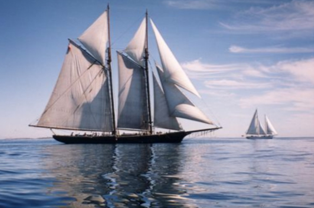
Built in 1894 in Essex, Massachusetts, as the Effie M. Morrissey, the schooner was initially used for cod fishing and the transport of goods across the North Atlantic. In 1926, she was acquired by Arctic explorer Captain Robert A. ´Bob´ Bartlett and became an important scientific research vessel. Under his command, she undertook approximately 20 Arctic expeditions, supporting studies of Arctic flora, fauna, and Indigenous communities. In 1940, she reached one of the closest points to the North Pole ever attained by a sailing vessel.
During the Second World War, she served with the United States Navy, carrying out support missions and hydrographic surveys in Greenland and the Arctic. Following Captain Bartlett´s death in 1946, the vessel was damaged by fire and eventually sank, but was later salvaged and restored.
In 1948, Captain Henrique Mendes purchased the vessel, renamed her Ernestina in honour of his daughter, and converted her into a Cape Verdean passenger and cargo vessel operating between Cabo Verde and the United States. Until the 1970s, she played a vital role in inter-island transport in Cabo Verde and became the last sailing vessel to provide regular passenger service for Cape Verdean emigrants travelling to the United States.
By the late 1960s and throughout the 1970s, interest in preserving the vessel grew in the United States. In 1976, following an unsuccessful attempt to participate in the American Bicentennial celebrations, the Ernestina suffered an accident that sparked a major international restoration campaign. Cabo Verde and groups of American volunteers joined forces to restore the historic vessel.
In 1982, the Republic of Cabo Verde officially presented the Ernestina to the people of the United States, transferring her to the Commonwealth of Massachusetts as a symbol of friendship and the historic ties between the two countries. The vessel subsequently received important recognition: in 1987, she was honoured for historic preservation, and in 1990, she was designated a U.S. National Historic Landmark.
Between 1988 and 2004, the Ernestina served as a sail training vessel, a living museum, and a cultural ambassador, offering educational programmes in maritime history, navigation, and environmental science to thousands of students and visitors.
From 2005 onwards, the vessel faced new challenges due to structural deterioration and the loss of certification to operate. Technical assessments and extensive restoration work were undertaken, including repairs to the hull, bow, and deck, with the support of public institutions, historical organisations, and volunteers.
Despite financial constraints and ongoing maintenance challenges, the Ernestina has continued to be preserved as an enduring symbol of the historic connection between Cabo Verde and the United States. In 2014, she was officially renamed Ernestina-Morrissey, bringing together the two defining chapters of her history: her American origins as a fishing schooner and scientific exploration vessel, and her legacy as a ship that forged cultural and migratory links between Cabo Verde and the Americas.
#ErnestinaMorrissey #MaritimeHistory #CaboVerde
Source: https://www.ernestina.org/about/about-ernestina/history/.
Image credit: Susan S. Banks. Photograph reproduced from the official website of the National Maritime Historical Society (https://seahistory.org/historic-ships/ernestina-morrissey/).